Showing posts with label japan. Show all posts

Sunday, September 8, 2013

Is Japan Bouncing Back?

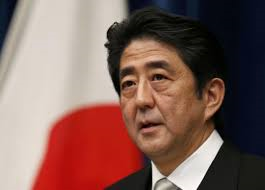
Japan's new Prime Minister, Abe, is aggressively trying to stimulate the Japanese economy and it looks as if "Abenomics" might be working.


The article: http://www.bbc.co.uk/news/business-24012225

Vocabulary to help you understand the article:

to bounce back - if you drop a rubber ball, it will bounce.  If something bounces back, it was doing well, started doing poorly, but has begun doing well again.

to stimulate the economy - to make the economy more active and to show more growth.

to revise - to correct, to bring something up to date.

annual - yearly.

to spur growth - to stimulate or motivate growth.  To make something grow faster. A spur is literally something a cowboy uses to make a horse run faster:


stagnation - if you leave a container of water just sitting around for a few days, it becomes stagnant.  If something like water stagnates, it doesn't move or change and it becomes bad tasting and unhealthful.  An economy that doesn't grow becomes stagnant.

aggressive - very active, forcefully active.

fueled optimism of a recovery - caused a positive belief that recovery (a good economy) can happen.

to invest - to place money in a company to help the company develop and make more money for the investors.

trickling down - if something trickles down, it slowly moves down like rain drops rolling down a window.  So when economists talk about money trickling down the economy, they mean that the rich build businesses and make money, but this money slowly makes its way 'downward' to the rest of society.  This was Ronald Reagan's economic policy - some believed it worked and others didn't.

the move is key to -  the move is important to, is central to.

welfare costs - money the government provides to those who have a hard time surviving without help.

domestic demand - if you raise taxes, you'll cut the amount of money people have to buy stuff, this will 'hurt demand' - demand will drop...meaning people will not want to buy as much stuff.  Economics is so tricky.  Domestic means in your own country. The opposite of domestic would be international.

to derail something -  a train or subway runs on rails.  If it derails, it can't run any more.  So if recovery gets derailed, the recovery stops.

public works spending - so economists are saying that the Japanese people are buying a lot of stuff and the government is spending a lot of money creating stuff in Japan, so even with a tax the recovery should continue.

a boost - increase.

the bid - a proposal, a plan.

refurbishing - fixing up and making them nicer.

to derive something - to get something.

sentiment - feeling.

Monday, May 13, 2013

Japanese Government Officials Will Continue Visiting A Controversial Shrine

Although World War II ended almost 70 years ago, various East Asian countries cannot forget some of the terrible things that happened.

For instance, many Koreans find it hard to forget that their country was occupied (Japanese soldiers had control of their land) from 1910 to 1945 and many Chinese cannot forget atrocities like Nanjing. (an atrocity is something horrible that happens involving the killing/murder of innocent people)

Here is an article about what the Japanese military did in Nanjing:
http://www.historyplace.com/worldhistory/genocide/nanking.htm

To many Americans, this attitude seems strange because the war ended so long ago.  Most, if not all of the people responsible for the war, are dead. Indeed, in Europe animosity (bad feelings) over World War II does not seem to exist.  It has become ancient history.

Many of my Asian students have different theories as to why World War II has not been forgotten in Asia.  Many of my Korean and Chinese students say that Japan never fully or sincerely apologized for what they did in the war.  Many of those students also claim that the war is not reported accurately (truthfully) in Japanese history books.  Some of my Japanese students, however, tell me that an apology was issued (given) but that there are political reasons as to why the war has not been forgotten.

One of the most controversial issues causing problems between Japan and China and Korea involves the Yasukuni War Shrine. 


Each year Japanese politicians visit the shrine to pay respect to the Japanese young men who died in World War II.  China and Korea object to this because they believe that many of the Japanese war dead committed terrible actions against people in China and Korea

(A controversial issue or topic is a topic that people like to argue about.  A shrine is like a holy or sacred place).

Here is a brief article stating that members of the Japanese government will continue to visit the shrine since they feel this is an "internal" Japanese matter.  Basically they are saying that every country has the right to do what it wants inside of itself.  If Japanese politicians want to honor their war dead, no other country has the right to tell them not to.

The article:

http://japandailypress.com/ldp-policy-chief-pledges-to-continue-visiting-yasukuni-shrine-despite-asian-protests-1328688


Vocabulary from the article:

to pledge - to promise.

a ruling party - the political party that has power currently.

a memorial - a place people go to remember something from the past.  In Brooklyn there is an amazing memorial to American soldiers who died in the 1770s and 80s in the Revolutionary War. Specifically, the memorial is for Americans who were taken prisoner by the English and who died on prison ships.  It's been a favorite place of mine to visit over the years. http://www.prisonshipmartyrs.com/Introduction.html

the outcry - complaints; when people speak out against what they feel is wrong

protests - when people take action to show that they disapprove of some policy or action

a mass visit - many people visited at one time

convicted of war crimes - after WWII the USA held war-crimes trials and found 14 Japanese soldiers guilty.  These soldiers were convicted by an American court.

a symbol - something that represents something else

a past aggression - a warlike action taken in the past

to be colonized - America was colonized initially by England.  Colonization is when a stronger country takes land from a weaker country and tries to duplicate itself there.  To colonize a country is to take it over and to try to make it look like your own country to serve your own country.

to be vocal in condemning something - to be very loud about saying something is wrong

the principle of non-interference - a principle is a starting point or a basic belief that can be shared by many people.  In 1972 both countries agreed not to interfere in each other's internal affairs.

tremendous sufferings - it should be tremendous suffering.  Suffering is non-countable.

a landmark apology - a famous apology.

The policy chief said... - Basically this politician seems to be saying that Japan feared becoming a colony of Western countries and this was why Japan developed its military and attacked other countries.

to revise an apology - to change an apology

an atrocity - something horrible that involves the killing/murder of innocent people.  The term is usually used in relation to something horrible that happened in a war.

to elaborate - to add details. Without elaborating - without adding details.

post-war - after the war.  So Abe seems to be saying that he might agree that some Japanese soldiers or military leaders had been war criminals.

----------------------------------------------------------------------

What do you think?  Does Japan have a right to honor its war dead?  Should China and Korea continue protesting this action each year?